


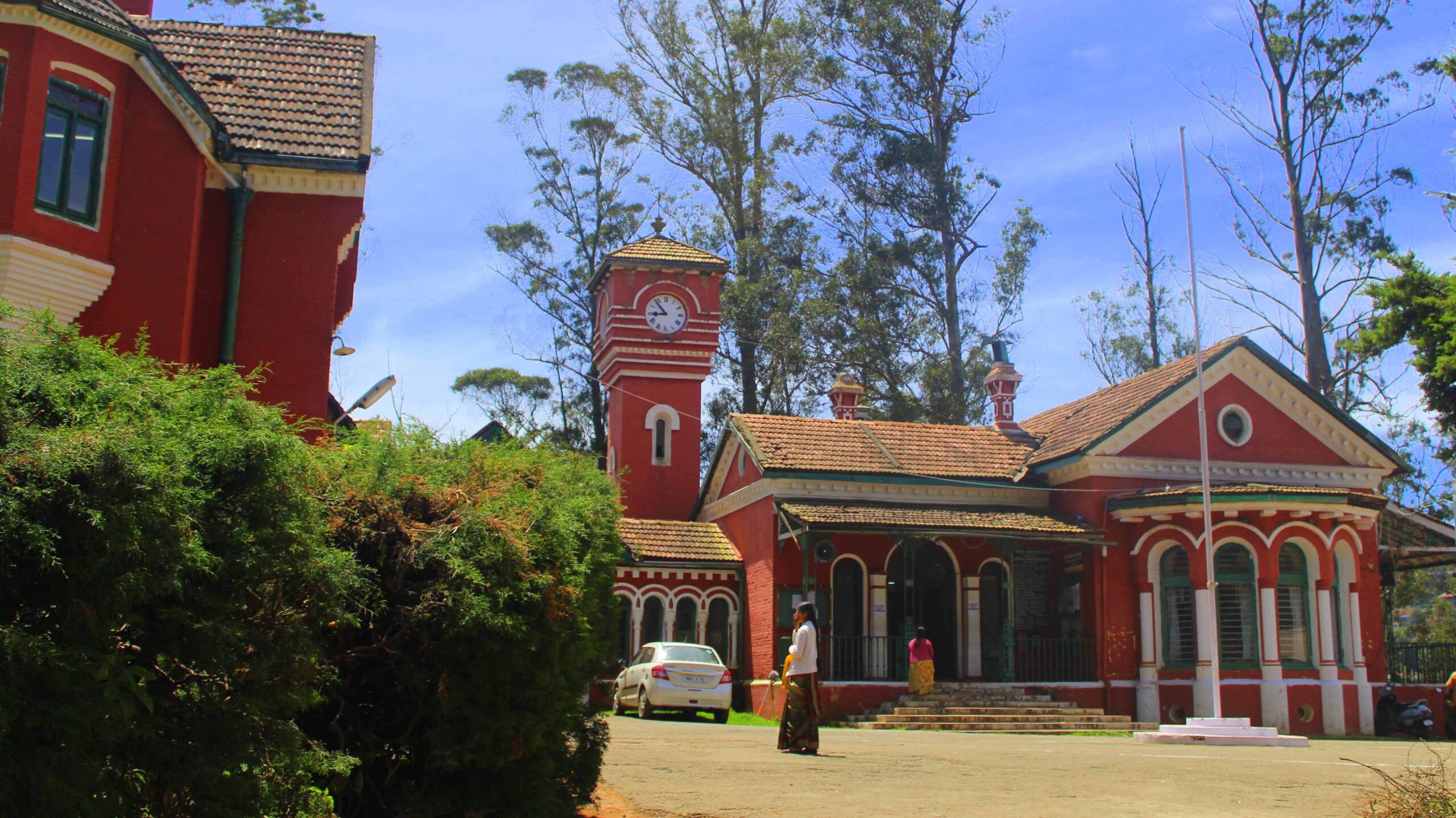

Government College of Fine Arts, Chennai
This is a prominent institution with a rich history, having been established during British rule in India as the first art school in the country.
- The School of Art, the oldest of the Institution was founded at Madras in 1850 by Dr. ALEXANDER HUNTER, M.D., F.R.S.C.E., an eminent surgeon in the British Military Service. The school aimed to inculcate the Victorian taste of art in the students. At the same time, their practical purpose was to provide the new generation with useful and enjoyable skills in the industrial ornamental arts. The Madras School of Arts was started in Pophams, Broadway in May 1850. Only in the 1870s, the school headquarters was moved to the present location in Poonamallee High Road.
- The school was taken over by the Department of Public Instruction in 1852. In consultation with the East India House and the Royal Academy in London, Dr. HUNTER set up an eight-member committee to decide upon the future course of study in the School of Arts and its management. As a result, the Madras School was converted into Government School of Industrial Arts consisting of two Departments – the Artistic and the Industrial. With the Government funds, books were procured from the South Kensington School of Arts in London, to which all the Colonial Art Schools were linked. Through teaching techniques of drawing and lithography, the students of the school itself contributed to illustrating numerous publications on the topics ranging from arts to science and engineering. There is no other library in Chennai, that has a collection of art books equal to that of the Government College of Fine Arts library. The art work in the college museum were either done by students or collected by the school in the nineteenth century. Museum was setup in the nineteenth century as a means for educating art school students, artisans and the public. Today, the collection serves as a historical record of that time period’s art production as well as museum collecting practices.
- In its sixteenth year in 1868, the Government of Industrial Arts had taught about 3500 students out of whom about 2000 were placed in India, Canada, Australia, England and the Andaman and Nicobar Islands. It sent out teachers to the art schools in Calcutta, Jaipur, Travancore, Mysore and Ceylon. It was also ready to assist in setting up art schools in Lucknow, Roorkee, Surat, Pune, Agra, Lahore and Assam.
 Own or work here?
Claim Now!
Claim Now!
Own or work here?
Claim Now!
Claim Now!
Choose a Plan to Claim Your Business

-
INR7560.00
/ Per Listing
-
Duration : 365 days
Lorem ipsum dolor sit amet, lorem sit.
- Map Display
- Contact Display
- Image Gallery
- Video
- Business Tagline
- Location
- Website
- Social Links
- FAQ
- Price Range
- Tags/Keywords
- Business Hours
- Resurva
- Timekit
- Menu
- Announcement
- Deals-Offers-Discounts
- Hide competitors Ads
- Events
- Lead Form
- Smart Card
- Collaboration
- Discount in Services & Products
- Professional Features
Claim request is processed after verification..
October, 2026
Friday
- Closed Now
August 26,2019
- Tuesday
- 9:00am - 10:00am
Appointment confirmation email will be sent upon approval.
Awesome Job!
We have received your appointment and will send you a confirmation to your provided email upon approval.

